Upon hearing the word "hernia," many people immediately picture an operating room and a scalpel. The fear of the knife
can be so intense that some endure pain for years just to avoid lying on
the operating table. The reality is far more reassuring. The vast majority of intervertebral disc herniations
are successfully managed without surgery, with surgical intervention reserved only for cases
where conservative treatment methods truly fail to help.
It is precisely because of this fear that people often seek professional help too late. It is worth noting that
seeing a neurosurgeon does not necessarily mean surgery is inevitable. On the contrary, the neurosurgeons
at Clinic Agatas in Kaunas emphasize that, out of all the patients who come for consultations,
no more than ten percent ultimately require surgery. For the rest, a suitable solution
is found through conservative—and often much simpler—pain management methods.
What exactly is a spinal disc herniation? The spine consists of vertebrae, with intervertebral discs situated between them that act as shock absorbers. Each disc has a tough outer fibrous ring and a soft, gelatinous core. Over the years, the core loses moisture and becomes less elastic, while the ring begins to crack under the strain. Consequently, a portion of the disc protrudes into the spinal canal and compresses a nerve root. It is this compression—rather than the disc itself—that causes pain. Herniations most often occur following spinal injuries or in areas subject to the greatest load and movement, specifically the lower lumbar region and the lower neck.
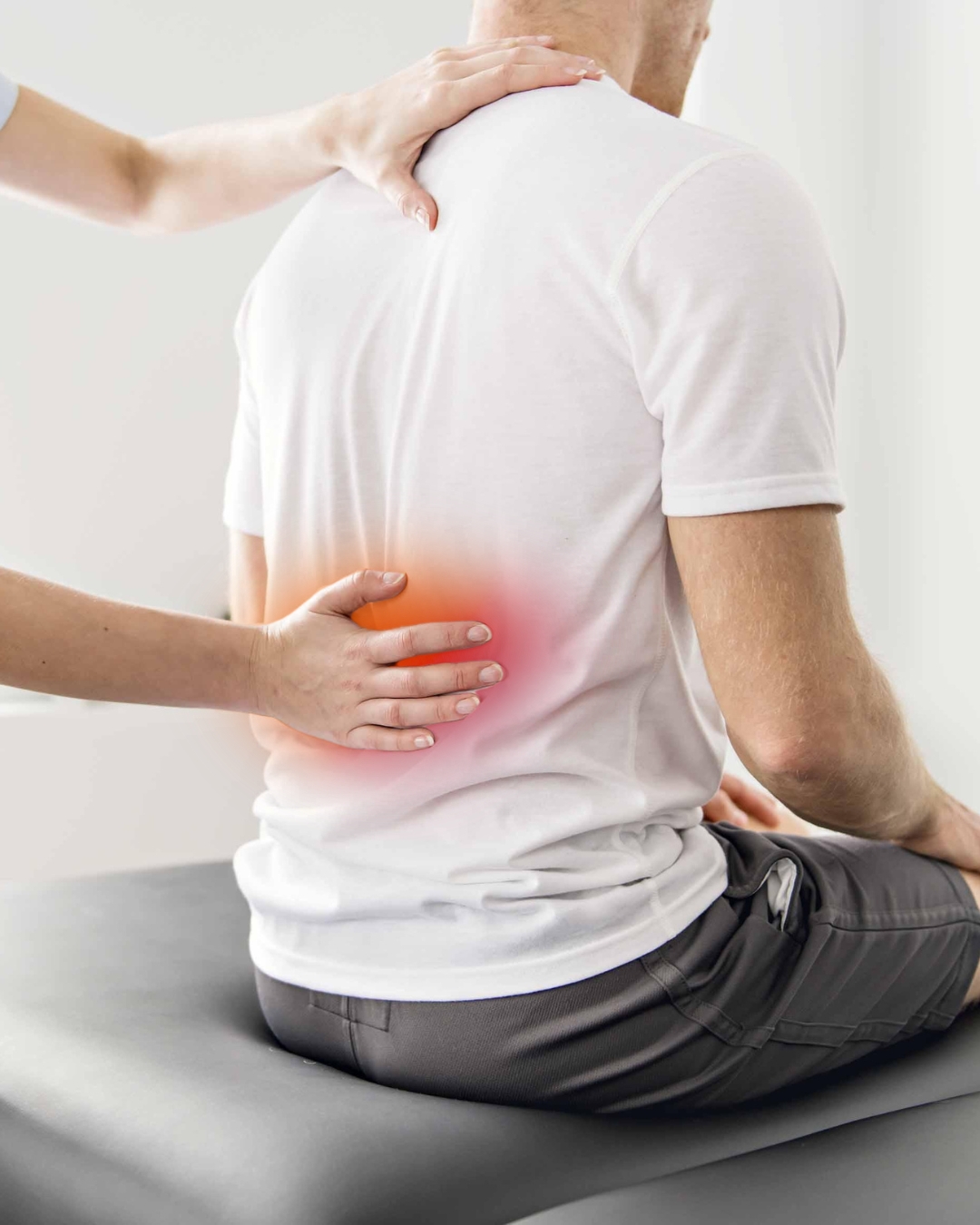
Recognizing the onset of a herniated disc is not difficult. Pain often begins in the back but quickly
radiates down to the leg or arm, accompanied by numbness, tingling, or even muscle weakness.
The pain is aggravated by bending, lifting heavy objects, or prolonged sitting, whereas lying down with
knees bent often brings relief. Interestingly, a herniated disc is not a disease of old age; it most
commonly affects people of working age, roughly between 35 and 60. In older adults, similar
symptoms are more often caused by a different condition—narrowing of the spinal canal, or stenosis—
and distinguishing between these conditions requires a specialist using MRI or CT scans.
Treatment almost always begins with conservative measures. Medications are prescribed
to reduce inflammation and swelling of the nerve root and to improve blood circulation.
This is combined with physical therapy, therapeutic massage, manual therapy, and a
regimen that avoids strain; most importantly, patients are taught proper daily posture
and movement. For the majority of patients, this combination is sufficient. The body
is given the time and conditions to recover, and the protruding part of the disc
gradually ceases to irritate the nerve. The individual's own efforts also aid this process—
ranging from lifting heavy objects correctly to regular exercise and maintaining a healthy body weight.
However, there are cases where delay is dangerous. If marked leg muscle weakness develops—
such as "foot drop," where the foot catches while walking—or if bladder and bowel
control is impaired, immediate surgery is required. These are signs that the nerve is being compressed so severely
that irreversible damage could occur. In such cases, waiting comes at the cost of nerve
function rather than money, so it is essential to seek medical attention immediately.
When conservative treatment is no longer effective, surgical options are considered; there are several of these. Microdiscectomy is the most common and longest-established procedure. During this operation, the neurosurgeon uses an operating microscope and an incision of approximately three centimeters to remove the specific part of the disc compressing the nerve. If the herniation is small and the disc has not yet degenerated, a non-incisional procedure known as nucleoplasty may be chosen. An electrode is inserted into the disc via a thin needle, and radiofrequency energy reduces the internal pressure, allowing the bulging disc to retract away from the nerve. This procedure takes about an hour, and the patient can get up and walk shortly afterwards. In cases of vertebral fracture caused by osteoporosis, vertebroplasty is performed; bone cement is injected into the vertebra, where it hardens within minutes to stabilize the spine.
The appropriate course of action is determined not by the intensity of pain on any single day, but by evaluating
the entire progression of the condition and imaging results. The patient's age, co-existing conditions, and even
body weight are also important factors. Therefore, the key message is simple: a herniated disc does not automatically mean surgery.
In most cases, it is sufficient to seek timely medical attention, receive an accurate assessment, and patiently follow the treatment plan.